

57 Leigh Road, Eastleigh, Southampton, SO50 9DF
Thinking About Improving Your Smile? Here's Where to Start
Dave Carbonell • 8 June 2026
Most people have something about their smile they'd change if they could. For some, it's the colour of their teeth, for others it's a chip that's been bothering them for years, or teeth that have gradually shifted and no longer sit quite right. The problem isn't usually a lack of interest in doing something about it. It's not knowing where to begin.
Cosmetic dentistry covers a much wider range of treatments than most people realise, and not all of them are complicated, expensive, or time-consuming. This guide is designed to help you understand your options before you book anything, so you can go into a consultation with a clearer idea of what you're looking for.
What Concerns Do People Most Commonly Have?
Before looking at specific treatments, it helps to think about what's actually bothering you. Most people fall into one or more of these categories:
· Stained or discoloured teeth: Often caused by coffee, tea, red wine, or years of normal wear. Colour can also change with age, regardless of diet or habits
· Crooked or crowded teeth: Teeth that have shifted over time, or never sat quite right to begin with
· Gaps between teeth: A single gap or more generalised spacing that affects the look of the smile
· Chipped or worn teeth: Small chips from accidents, or gradual wear that makes teeth look shorter or uneven
· Missing teeth: A gap left by an extraction or tooth loss that affects both confidence and function
Understanding which of these applies to you is the first step, because different concerns point towards different treatments. There's rarely a one-size-fits-all answer.
Teeth Whitening: Often the First Step
If the main concern is the colour of your teeth, professional teeth whitening is usually the most straightforward place to start. It's one of the most commonly requested cosmetic treatments and, when carried out properly, delivers noticeable results without affecting the structure of your teeth.
Professional whitening uses higher-concentration bleaching agents than anything available over the counter, and it's applied in a controlled way that protects the gums and surrounding tissues. The results are typically more consistent and longer-lasting than home whitening kits, and the process is supervised by a qualified dental professional throughout.
Straightening Teeth Without Traditional Braces
A lot of adults who never had orthodontic treatment as teenagers find themselves wishing their teeth were a little straighter, but the idea of metal braces as an adult can feel like a step too far.
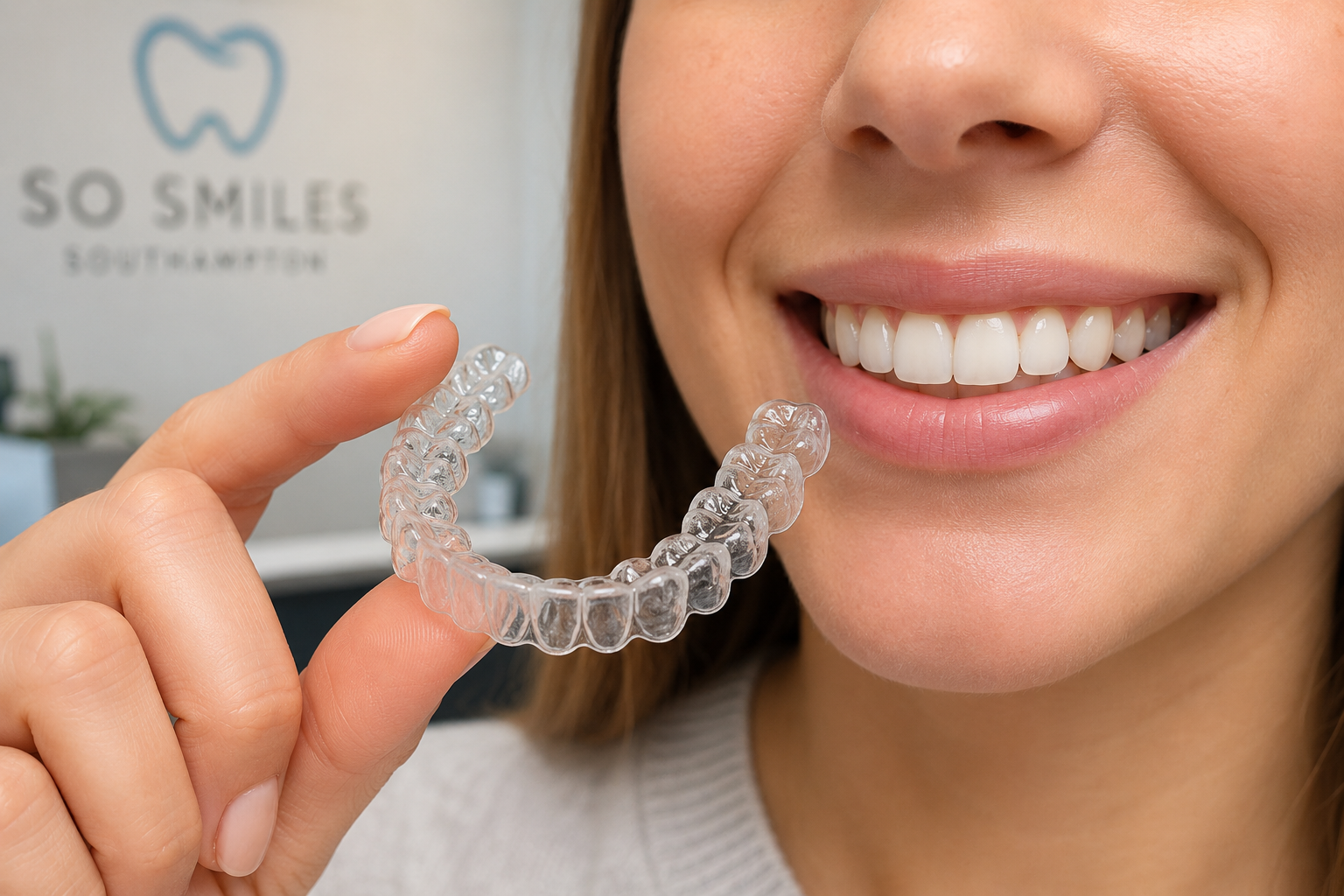
Clear aligners offer a more discreet alternative. They work by using a series of custom-made, removable trays that gradually guide the teeth into a better position over time. Because they're transparent and removable, they tend to fit much more easily into adult life than fixed braces.
They're not suitable for every case. More complex orthodontic issues may still require traditional treatment. But for mild to moderate crowding, spacing, and alignment concerns, aligners are worth a serious look.
Key things to know:
· Aligners are worn for 20 to 22 hours a day for best results
· Treatment time varies depending on the complexity of movement needed
· A proper assessment is needed to confirm suitability before starting
· Retention after treatment (usually a retainer) is important to maintain the result
Composite Bonding: Versatile and Often Underrated
Composite bonding is one of those treatments that doesn't get as much attention as whitening or aligners, but it quietly solves a surprising range of cosmetic concerns in a single appointment.
The process involves applying a tooth-coloured resin material directly to the surface of the tooth, shaping it, and then setting it with a curing light. It's used to:
· Repair chips and minor fractures
· Close small gaps between teeth
· Improve the shape or length of a tooth
· Smooth out uneven or worn edges
· Cover surface staining that whitening alone doesn't fully resolve
It's a conservative treatment in the sense that it doesn't require removing tooth structure in most cases, which makes it appealing for patients who want a meaningful improvement without anything too involved.
The results depend heavily on the skill of the clinician applying the material, so it's worth looking at examples of previous work when you're choosing where to go.
Comparing the Most Common Cosmetic Options
| Treatment | What It Addresses | Approximate Duration | Reversible? |
|---|---|---|---|
| Teeth Whitening | Staining and discolouration | One appointment or at-home course | Yes |
| Clear Aligners | Crooked, crowded or spaced teeth | Several months to over a year | Yes ( with retention) |
| Composite Bonding | Chips, gaps, shape, minor wear | Usually one appointment | Yes |
| Dental Veneers | Shape, colour, size, proportion | Two or more appointments | No |
| Smile Makeover | Multiple concerns treated together | Varies by treatment plan | Depends on treatments used |
Why a Consultation Matters Before Anything Else
Reading about treatments online is a useful starting point, but it can only take you so far. The right option for your smile depends on the actual condition of your teeth, your gum health, your bite, and what you're hoping to achieve.
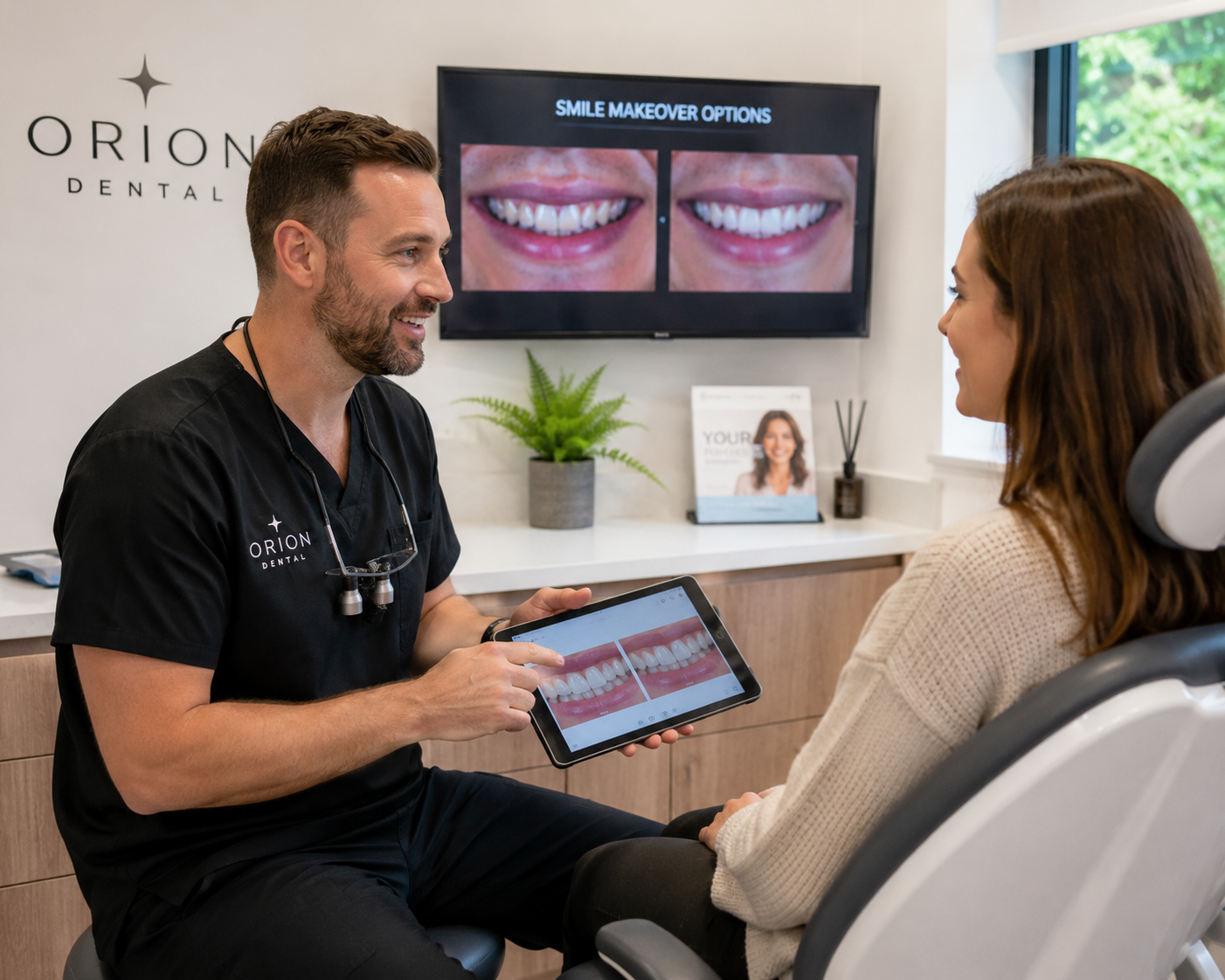
A cosmetic dentistry consultation gives a clinician the opportunity to assess all of these things properly. It's also the chance for you to ask questions, understand what's realistic, and think about what fits your budget and timeline before committing to anything.
At Orion Dental, patients coming from Eastleigh, Southampton, and the surrounding area regularly start with a conversation rather than a treatment plan. That approach tends to produce better outcomes because the treatment is matched to the person, not the other way round.
A smile makeover doesn't have to mean a long list of treatments. For some people it's one straightforward procedure. For others it's a phased plan over time. Either way, it starts with understanding what you actually want and what's achievable.
Frequently Asked Questions
Is cosmetic dentistry suitable for everyone?
Most adults in good general dental health are suitable candidates for some form of cosmetic treatment. However, any active decay, gum disease, or other underlying dental issues would need to be addressed first. This is one of the reasons a thorough consultation is always the starting point.
How long do cosmetic treatments last?
It varies by treatment. Professional whitening typically lasts one to three years depending on diet and habits. Composite bonding usually lasts five to seven years with good care. Veneers and implants can last significantly longer. Your dentist will give you realistic expectations during a consultation.
Will cosmetic treatment hurt?
Most cosmetic treatments are either entirely pain-free or involve minimal discomfort. Whitening can cause temporary sensitivity in some patients. Bonding requires no drilling in most cases. Anything more involved would be carried out with appropriate anaesthetic.
How do I know which treatment is right for me?
The honest answer is that you find out at a consultation. What works for a friend or looks good in a before-and-after photo online might not be the best option for your teeth and your goals. A professional assessment gives you a clear picture based on your actual situation.
Thinking About Taking the Next Step?
If any of this has resonated and you've been putting off looking into your options, a consultation is a low-commitment way to get some clarity. You don't need to have made up your mind before you go in.
Get in touch with Orion Dental to arrange a chat about what's possible. We see patients from across Eastleigh, Southampton and the surrounding area, and we're used to helping people figure out where to start.
Visit dentistinsouthampton.co.uk to find out more or to book a consultation.
How much does composite bonding cost in Southampton? See local starting prices, what affects your quote and how ORION in Eastleigh plans treatment.

Nervous about visiting a dentist in Southampton? Here’s what to expect at your first appointment and how to feel more at ease.